Water Quality
Degradation of water is NOT in the public interest
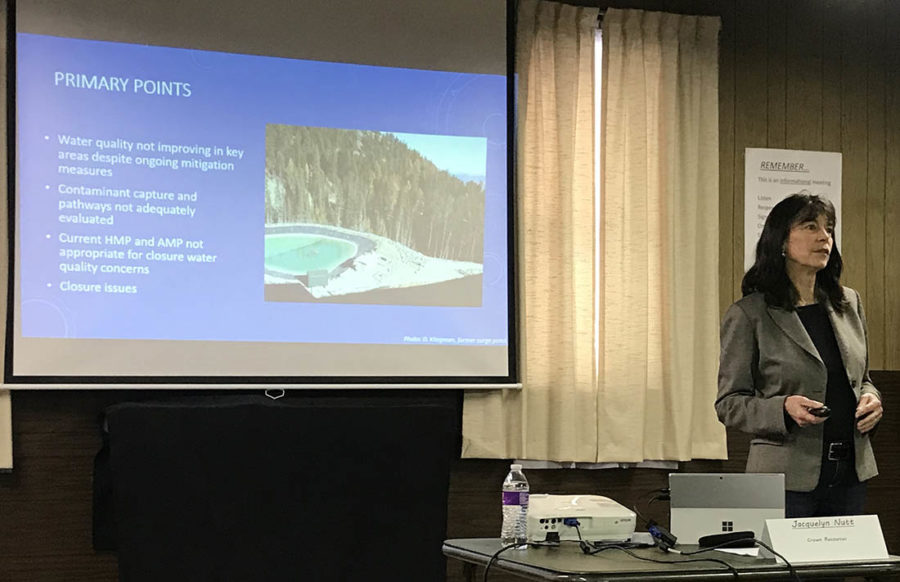
On October 9th the Washington Department of Ecology issued a Water Quality Certification under section 401 of the federal Clean Water Act. In so doing it declares that it has reasonable assurance that water quality resulting from Crown Resources/Kinross mine proposal will meet standards. OHA has appealed this permit.
Part of their analysis as required by Washington State’s new standards called “Teir II” examines if the degradation of water quality is in the necessary and in the public interest.
Ecology has failed to answer many of the same basic questions that caused the rejection of the open pit proposal in January of 2000. Ecology has not provided reasonable assurance that the high quality of water on Buckhorn Mountain will be protected. Ecology has not done an adequate Tier II analysis. Ecology accepted the mining proponent’s Tier II analysis that completely failed to include any information on how the mine would harm the public.
Regarding the public interest the Teir ll analysis only looked at the economic benefits and testimonials from people who would benefit from the mine. The analysis completely failed to weigh the impacts vs benefits in any kind of objective examination that considers people and wildlife that use the water around Buckhorn Mountain.
Other problems with the 401 include the unrealistic prediction that construction damage to Marias Creek Rd would be revegetated in a year or two. Currently they say cut-banks are 28% vegetated which produces 3 tons of sediment per year and they assume revegetation would be 45%, otherwise sediment could increase to 10 ton per year depending on the weather. Sediments in Marias Creek from ore hauling in the current plan is unacceptable.
The Adaptive Management Plan is inadequate to deal with problems that are likely to develop. It is basically: Self-monitoring, self regulation, self enforcement. If something happens, someone will do something, sometime....maybe.
The reporting and response requirement as detailed in the Monitoring Plan are inadequate to insure water quality will be protected.